Why Is My Car Overheating? A St. George Driver's Guide to 110° Summers
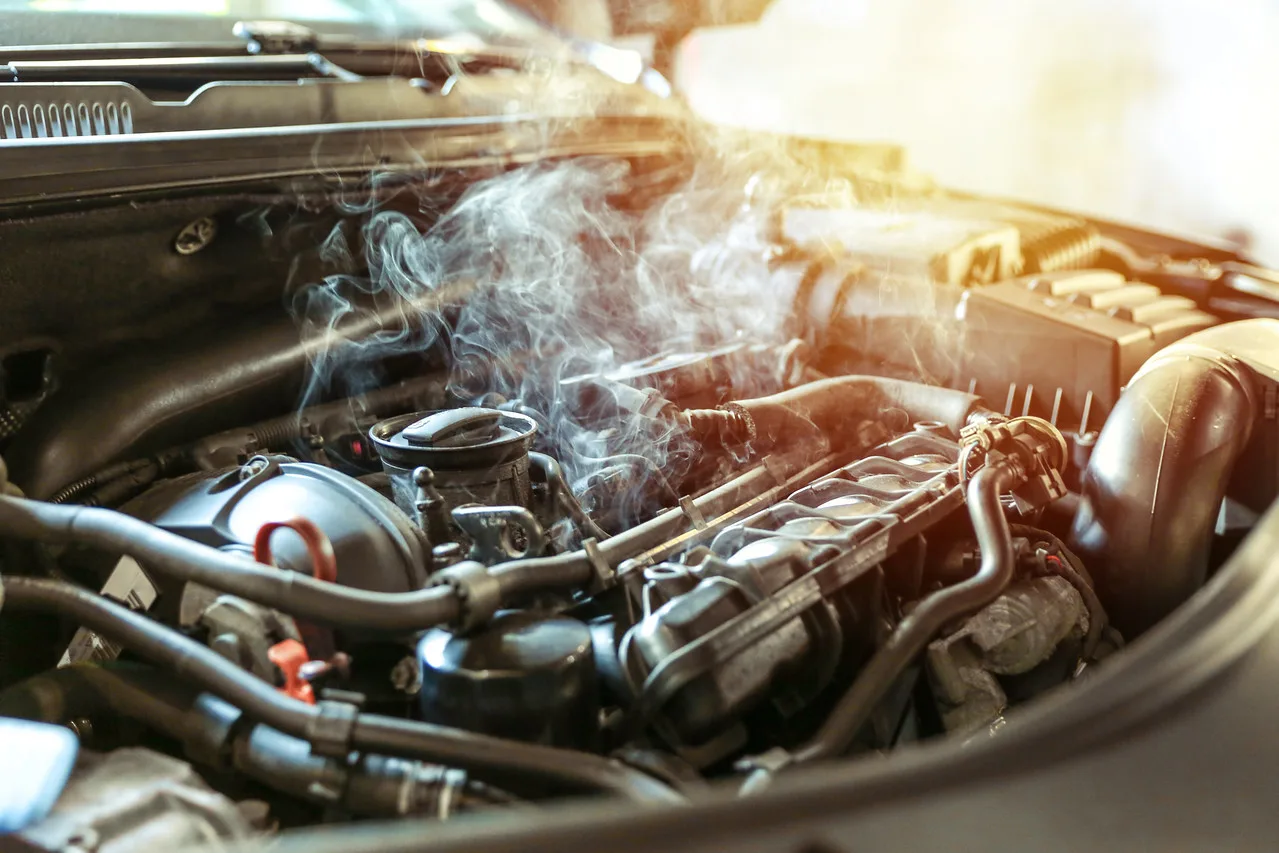
There's a stretch every summer — usually late June through August — when our phones light up with the same call over and over: steam from under the hood, temperature gauge buried in the red, vehicle pulled over on the side of I-15 or Red Hills Parkway.
St. George heat is brutal on cooling systems. A marginal radiator or a slightly low coolant level that would never cause a problem in April becomes a dead engine in July. Here's what's actually going on, and what to do about it.
Why Summer Heat Pushes Engines Over the Edge
Your engine runs at around 195–220°F regardless of the season, and the cooling system's job is to dump that heat into the outside air. The hotter the outside air, the harder that job gets. At 110°F ambient — with asphalt surface temperatures far higher — the system has almost no margin left. Add a hill (think the climb up to Hurricane or north through the Black Ridge), a load of passengers, a trailer, and the A/C running full blast, and a cooling system with any weakness will lose the fight.
The Usual Suspects
When we tow in an overheated vehicle, it's almost always one of these:
-
Low coolant. The #1 cause. A small leak — a weeping hose, a failing water pump seal, a pinhole in the radiator — slowly drops the level until there isn't enough coolant to do the job. If you're topping off more than once a season, you have a leak.
-
Failed thermostat. A stuck-closed thermostat blocks coolant from circulating. The failure often happens suddenly, and the temperature spike is fast.
-
Radiator problems. Clogged internally with corrosion, or blocked externally with bugs, dust, and debris (very common here). Either way, airflow and heat transfer drop.
-
Dying water pump. The pump circulates coolant through the engine. When the impeller or bearing fails, circulation stops — sometimes with a telltale coolant leak or grinding noise first.
-
Electric fan failure. At highway speed, airflow through the radiator is free. In stop-and-go traffic on Bluff Street in July, your electric fan is doing all the work. If it fails, you'll notice overheating specifically at idle and low speed — that pattern is the giveaway.
-
Old coolant. Coolant breaks down over years, losing its heat-transfer ability and turning corrosive. If you can't remember your last coolant service, it's overdue.
The Needle Is Climbing — What Do I Do Right Now?
Turn off the A/C and turn on the heater, full blast. Yes, in July. The heater core is a small secondary radiator, and running it dumps engine heat into the cabin. It's miserable and it works. Roll the windows down.
Get out of stop-and-go if you can. Steady movement means airflow. Crawling in traffic is the worst case. If the gauge hits the red zone or you see steam, pull over and shut it off. Continuing to drive an overheating engine is how a $30 hose becomes a $6,000 engine. Warped heads and blown head gaskets happen fast.
DO NOT open the radiator cap. A hot cooling system is under pressure. Opening the cap can spray scalding coolant over you. Wait at least 30 minutes — longer is better. Once fully cool, check the coolant level. If you have coolant (or even water in a pinch) and the level is low, top it off and you may be able to limp to a shop. But understand: the coolant went somewhere. Find out where before trusting the vehicle again. If it overheats again within minutes, stop driving and call for a tow. At that point something is genuinely broken, and every mile risks the engine.
An Ounce of Prevention (Worth a Lot in This Town)
Have the cooling system inspected every spring, before the heat arrives — hoses, belts, coolant condition, radiator cap, and a pressure test for leaks Keep coolant at the proper level with the proper mix (straight water boils too easily and corrodes the system) Gently rinse bugs and dust from the radiator and A/C condenser fins Watch your gauge on long climbs and when towing — catching a creep at 3/4 beats a boil-over at the summit Keep water in the car for yourself, not just the radiator; getting stranded in our heat is a safety issue, not just a car problem
Stranded and Steaming?
If your vehicle overheats anywhere in St. George or Southern Utah, don't gamble with your engine. Rowley Boys Towing offers 24/7 towing and roadside assistance — call 435-773-2775 and we'll get you off the hot asphalt and to a shop safely.